
Expert In Skin And Hair Types Around The World
To take into account the wide variety of skin and hair around the world, L’Oréal's research teams have invested in many studies and developed, over decades, the tools for customized analysis.
Ethnic origin, age, dietary habits, geographical and cultural environment: numerous factors influence the characteristics of skin and hair. The density, rate of growth, and curliness of hair as well as the diameter of individual hairs differ in Asia, Europe and Africa. Understanding this extraordinary diversity represents a real challenge for L'Oréal's Research and Innovation teams . To use it more effectively, they have done numerous studies and focused on developing accurate and objective measurement tools.
A NEW GEOGRAPHY OF SKIN COLOR
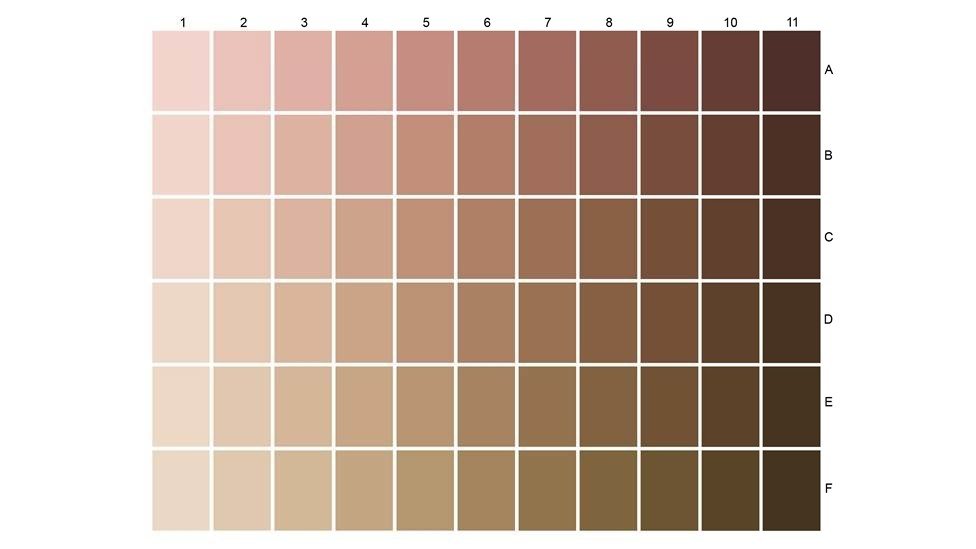
Knowing more about different skin types and getting a deeper understanding of the biological mechanisms that are at work enables us to counter aging and sun damage but also to provide make-up products that are adapted to individual needs. One of the studies carried out focuses on the actual color and the perceived color of skin. L'Oréal's researchers assessed the skin color of women from every part of the world, along with interviews that enabled women to match their skin tone to a color chart with 66 shades, and an instrumental approach using the "chromasphere®", an instrument patented by L'Oréal to measure color. In this manner they were able to establish a veritable geography of skin colors around the world. Based on objective elements, this mapping makes it possible to adapt cosmetic products to the expectations of different consumers, for example in the different foundation shades available, or in evaluating the effectiveness of skin care products that target radiance or uneven skin tone.
A PRECISE APPROACH TO THE DIVERSITY OF HAIR TYPES
The Research and Innovation teams also developed specific tools to analyze the complexity of types of hair around the world. They went beyond the traditional classification of three hair types (African, Asian and European), by developing a scientific approach based on physical measurements of curl: the diameter of the curvature, the curl index, the number of waves and of tendrils. The study was performed on over 7,500 heads of hair in 23 countries. The result is a detailed classification of the world's hair types in 8 categories, corresponding to a scale of curl, from the straightest (1) to the curliest (8), independently of any reference to ethnic origins. This study, published in a scientific journal, takes into account the effects of multiracial families and demographic migrations. In a country like Brazil, with a population that is very multiracial, we find no less than six different hair curl types. Another example is a tool developed in collaboration with Dassault Systèmes, a 3D model of hair types around the world that makes it possible to perfectly visualize the different parts of a strand hair, to understand the biological mechanisms and to establish a connection between the shape of the hair root and the curliness (a root shaped like a golf club produces a curly hair).
A GLOBAL CENTER FOR HAIR RESEARCH
In 2012, L'Oréal inaugurated a global research center in Paris-Saint-Ouen that is completely dedicated to hair research, the hub of a network of six regional poles around the world. This center brings together all the competencies of L'Oréal's Research and Innovation to support the three lines of business related to hair: color, hair care – shampoo and cream rinse – and shape, including styling, perms, smoothing or straightening
FROM SKIN AGING ATLAS TO AGING MORPHING
Years ago, L’Oréal started the realization of a skin aging atlas.
To develop this atlas, 400 volunteers, men and women, aged from 18 to 70, of European origin were recruited for the photographs.
The first volume deals with the signs of faced ageing in European populations. It was followed by a second volume devoted to Asian populations, and a third for black African-origin populations. These works served as a basis for the aging morphing.