THE SUNBE CAUTIOUS


SUN CAPITAL AND PHOTOPROTECTION

Sun capital - Natural photoprotection - Photoprotection and sunscreen - Assessing sunscreen efficacy - Illusory protection

Until the first third of the 20th century, fashion dictated that women should have a pale complexion and skin as white as possible. Being protected from the sun's rays on the beach therefore called for parasols and cabins as shown in the painting by Eugne Boudin in 1864.
Plages aux environs de Trouville (Eugene Boudin)

But all that changed during the 20th century - with the Industrial Revolution, spare time pursuits, transport, naturism, fashion, and the sun worshipping industry that made a religion out of tanning. At that time the risks involved in exposure to sunlight were blissfully ignored, and it is only greater awareness of its harmful effect in recent years that has created the need for efficient and appropriate photoprotection.


Sun capital

Every person has a certain amount of sun capital similar to a reservoir which is then drawn upon every time people are exposed to the sun's rays. This must therefore be carefully managed if it is to be used efficiently, and it is especially important to protect children who have a thin epidermis, limited melanogenesis and no hydro-lipidic film covering the horny layer due to the inactivity of the apocrine and sebaceous glands. This is why children should be kept out of the midday sun, taught to prefer the shade and to wear a hat or clothing with a high Sun Protection Factor (SPF), such as Denim material which has an SPF of 1600.


  Natural photoprotection

The skin has its own natural defence systems enabling it to resist the damage caused by the sun's rays. These defences are mainly provided by the horny layer and melanin - UVB rays trigger the production of melanin and favour keratinocyte differentiation, which leads to a thickening of the horny layer to protect the skin from future exposure. UVA rays do not generate the same level of protection as tanning produced by natural UVB rays. First of all, because UVAs do not bring about any thickening of the horny layer but only a light tan, resulting from the oxidation of melanin already present in the skin. Caution should therefore be exercised in the use of sun lamps where high doses of UVA rays are added to those received from natural sunlight, making it all too easy to forget the insidious dangers hiding behind the appeal of a tan induced this way.
Tanning therefore offers the most important means of protection since the melanin produced acts as a filter absorbing more than 70 % of the UV rays that penetrate beyond the horny layer. But we do not all react to the dangers of the sun in the same way since pheomelanin and eumelanin do not offer the same degree of protection against UV rays. The pheomelanin found in redheaded or fair-skinned people contains many sulphur atoms, which is not the case for eumelanin, and can produce derivatives, which are toxic for the cells under the effect of UV rays. Very fair or light-skinned people are therefore more subject to UV-induced skin lesions than others.
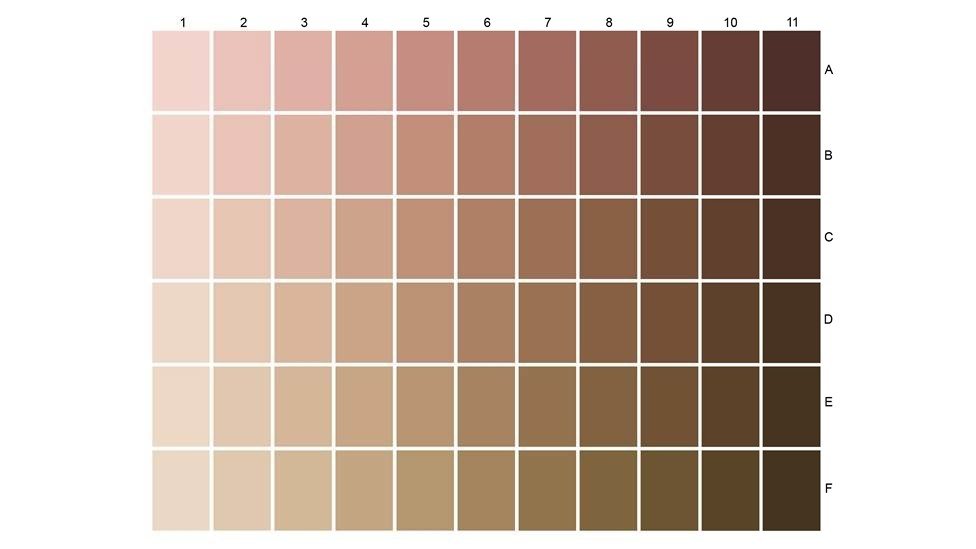
Generally speaking, protection by tanning varies according to each person's genetically determined phototype. The classification of these different phototypes is drawn up according to sunburn sensitivity and a capacity to tan. The minimum erythema dose (MED) defines a subject's susceptibility to sunburn and is 60 times higher for an individual with a black skin than for someone with a fair skin, redheads having the lowest rating.
Other natural molecules such as the carotenoids, vitamin C or vitamin E contribute to photoprotection: The chemical structure of carotenoids enables them to intercept and neutralise free radicals.
Vitamin C, supplied by a diet rich in fruit and vegetables, is necessary to maintain a good level of immunity since it increases lymphocyte proliferation and stimulates the production of antibodies. Vitamin E can neutralise the particularly active form of oxygen (singulet oxygen) which has high oxidizing power, and therefore this substance acts as an anti-oxidant.


Mexoryl SX et XL the most advanced organic UV sunscreens
Mexoryl SX et XL the most advanced organic UV sunscreens.
Photoprotection and sunscreen

There are two families of chemical products offering UV protection - one based on mineral agents and the other on organic agents. The first of these combines zinc oxides and titanium dioxides which work by reflecting the rays. The second are complex carbon-based molecules, which act by absorbing the UV energy. For a very long time, sunscreen products only protected the skin from the effects of UVB rays, since the harmful effects of UVAs were unknown. The many UVB filters on the market have no problem of stability to light and are generally oil soluble - in contrast with the UVA filters which lacked this photostability. The research carried out by L'Oral in the field of photoprotection concentrated on discovering molecules capable of absorbing both UVA and UVB rays and developing formulae which would be photostable.
This research has resulted in the development of two filters:
Mexoryl- SX, a photostable UVA filter soluble in the water-based part of sunscreen products, was patented in 1982. The first suncare products containing Mexoryl-SX were launched in 1992. It is still the only specific UVA filter on the market to combine all these qualities.
This was followed by Mexoryl-XL, also photostable, offering two balanced protection against UVA and UVB, and soluble in the lipophilic, the oily part, of the emulsions, patented in 1988. Mexoryl-XL has now been launched in various L'Oral group sunscreen products. Mexoryl-XL is an ideal complement to Mexoryl-SX.
And now L'Oral Research is going even further - its researchers have developed a filtration system combining photostable UVA filters (such as the Mexoryls or photostabilised Parsol) and UVB filters in both parts (water-based and lipophilic) of the suncare product emulsion.
This has enabled L'Oral to develop the first "intelligent" sunscreen. These suncare products are uniformly applied to the skin, are water and sweat resistant, odourless and will not stain clothes. This sunscreen system may be called "intelligent" because the combination of filters in its formula enables the suncare product to be adapted to different intensities and conditions of exposure to the sun over the entire area to which the product has been applied.
As mentioned earlier, organic filters are complex carbon-based molecules, which act by absorbing the UV energy. These molecules, have "rigid" links in which the groups of atoms on either side of these links are in a precisely defined "resting" position. When struck by UV rays, the photostable filter becomes excited, the groups on either side becoming mobile before returning to their former position via the deactivation process.
isomerisation video: low bandwidth
isomerisation video: high bandwidth
The return to the rest state takes place via energy dissipation in the form of imperceptible warmth.


  Assessing sunscreen efficacy

UV-B Sun Protection Factors
A sunscreen's efficacy is measured in terms of its Sun Protection Factor (SPF). This factor is the ratio between the minimum erythema dose (MED) when the product is used and the MED value without it. Product concentration is standardised at 2 mg/cm2. The higher the SPF the better the protection.
Practical determination is carried out by the usual means, in a laboratory, on the backs of healthy human volunteers, by exposing two series of delimited areas - one with protection and the other without - to increasingly powerful doses of UVB coming from a stable artificial source. The doses are proportional to the length of exposure and measurements are taken of the doses necessary to obtain minimal erythema.

UVA Protection Index
The UVA protection Index can be assessed in a similar way as that used for UVBs, measuring the skin's response to UVA alone. These rays trigger the appearance of grey-violet pigmentation which stabilises 2 - 4 hours after exposure. The ratio of UVA energy producing this specific pigmentation on protected skin to that of an area without protection gives the specific protection value against the intensity of UVA present in sunlight. This method of assessment, termed PPD (Persistent Pigment Darkening) is the only method approved in Japan and is in the process of becoming approved in the European Community.


  Illusory protection

Self-tanning creams
Self-tanning creams used in a esthetical goal, are not sunscreens. They colour the outer layers of the epidermis, without any synthesis of melanin. The colouring will disappear as the skin is renewed. Self-tanning products offer no protection - unless it is specifically indicated on the packaging that the product contains a photoprotective sunscreen.
Sunlamps are in no way beneficial to health, except in very limited cases and under medical control. Puvatherapy or photo-chemo-therapy is used to treat certain skin disorders, in association with photosensitive substances. The UV rays produced by sunlamps are UVAs. They do not result in "sunburn", but the amount received during a session is added to that coming from the sun itself, thereby accelerating skin ageing and increasing the risk of skin cancer.


WELCOME
AN ORGAN REVEALED
PROTECTING, SENSING, REPAIRING
AN ORGAN WHICH CAN BE GROWN
THE SUNBE CAUTIOUS

Not all rays have the same wavelength
Get exposed at your own risk
Sun capital and photoprotection
CUTANEOUS DISORDERS
WELL-BEING - SKIN-DEEP AND DEEPER
OBSERVING THE SKIN
WORDS, RITES AND CUSTOMS
TOOLBOX


The sun... be cautious

Not all rays have the same wavelength

Get exposed at your own risk

Version Franaise Copyright Newsletter Site Map / Quick Access